
For years, the sunrise in Doko Village did not just bring the promise of a new day; it brought a gnawing anxiety.
For 45-year-old Nandutu Prossy, a mother of six, the first thought every morning was a desperate calculation: where would the water come from today? The answer was often a muddy, unprotected spring shared with livestock, a source that left her children battling constant typhoid and stomach upsets. “The fights were too many,” she recalls, her voice trembling. “We would wake up at 4 a.m., but still find a long line. Women would wrestle over jerrycans, and the men would sometimes come to push us aside.”
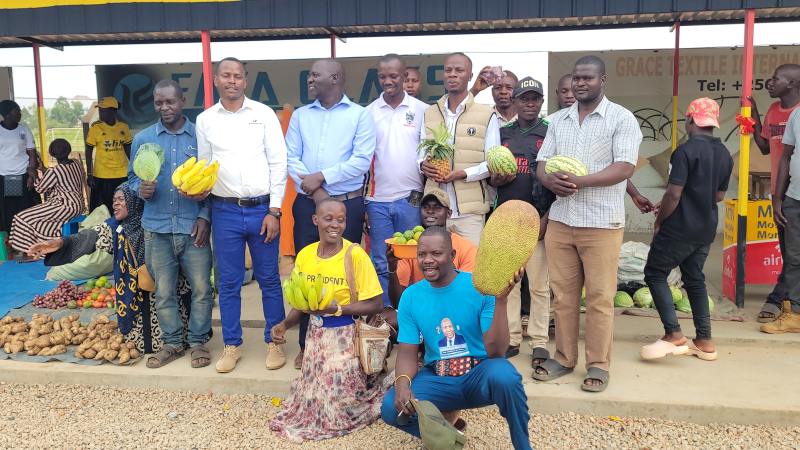
That era of desperation, physical brawls, and dirty water ended this morning. Sino Mbale Industrial Park, in a burst of goodwill and community partnership, officially handed over a state-of-the-art safe drinking water well and a protective market shelter to the weary yet hopeful residents of Doko.
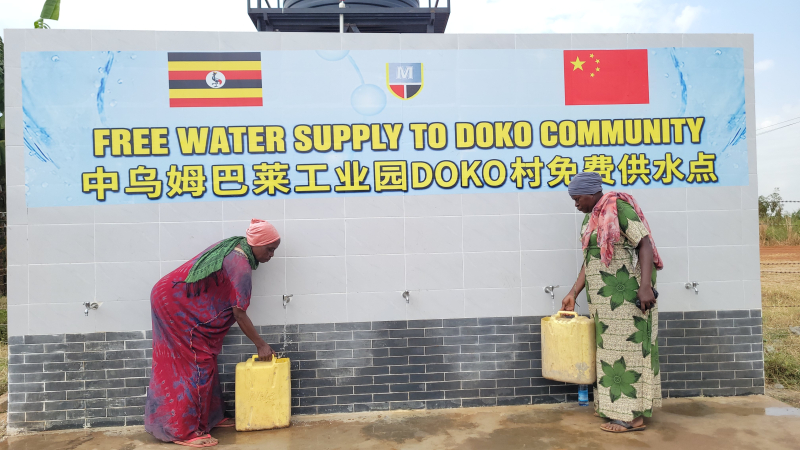
At the commissioning ceremony, the gushing clear water from the underground extraction point mirrored the tears of joy from women like Manisra Wegosasa. For Manisra, the change is stark and immediate. “During the dry season, we were forced to swallow dirty water because there was no alternative. We would walk kilometers with heavy containers on our heads, only to get water that made our families sick. Now, life has changed,” she said, her gratitude extending to the park’s management and President Museveni for locating the industrial hub in their vicinity.
Mr. Michael Hwang, an administrator at Sino Mbale Industrial Park, explained that the project was born from listening ears, not just business sense. “Water is life. We realized many families were spending heavily on water or consuming unsafe sources. As a responsible investor, we established this free water project as our appreciation for a community that has warmly supported our operations,” Hwang stated, noting that development is measured by the positive impact on surrounding communities, not just factory walls.
According to Park Spokesperson Kennedy Mushemeza, the population explosion of factory workers had stretched the existing water sources thin. The new borehole, designed to serve over 20 villages without strain, now stands as a monument to relief. Crucially, Sino management will fully fund the system’s maintenance. “No resident will be charged a single coin for repairs,” Mushemeza assured the cheering crowd. “Your only task is to fetch clean water for free and safeguard this project from saboteurs.”
While the water quenches the physical thirst, a newly constructed market shelter now protects the women’s economic lifeline. 38-year-old Wanyenze Betty, a tomato and greens vendor, spent years enduring what she called “brain-melting heat” and sudden downpours that ruined her stock. “Before, when the sun was too hot, I would feel dizzy and lose my appetite. When it rained, I would bury my produce under a tarpaulin, but they would still rot,” Betty explained, patting the solid roof above her stall. “Now, I can work all day without the sun beating me. My vegetables stay fresh.”
The area’s political leaders echoed the residents’ relief. Mbale City Mayor, Her Worship Joyce Kidolu, praised the park, noting that alongside the water and shelter, the donation of over 200 dustbins would significantly ease the burden of keeping the industrial city clean. Industrial City Division MP, Hon. Karimu Masaba, rallied his constituents to take ownership. “This is a great development, but it is now the locals’ duty to ensure these properties are well-used and protected. If the budget allows, I pray Sino extends these services to even more corners of our division,” he appealed.
Mushemeza confirmed that the trio of projects—the water well, the market shelter, and the 200 dustbins—cost the park approximately 115 million Ugandan Shillings. While a modest figure on a corporate balance sheet, to the people of Doko, it is priceless capital. It is the difference between a night of stomach pain and a night of peaceful sleep; the difference between a sunstroke and a dignified day’s wage.
As the taps ran freely for the first time, the long queues of jerrycans formed orderly, absent of the old violence. The water wars of Doko are fading, replaced by the rhythmic hum of a pump—a clear, unmistakable sound of a community finally drinking to its health.








Disqus comments error!
Disqus shortname is required to use Disqus comments. Please ensure you have specify a valid registered Disqus shortname.